A wave, not a diagnosis
When panic rises
Five questions that point to a skill. This will not say you have panic disorder. It will not replace medical care.
Educational use only. This is not a diagnosis, not a clinical screening instrument, and not a substitute for talking with a licensed clinician. Answers stay in this browser (localStorage). Nothing is sent to a server. If you are in crisis in the US, or you do not feel safe, call or text 988. If someone is in immediate danger, call 911.
If chest pain, fainting, or breathing trouble might be medical, get urgent medical care. In the US, call or text 988 if you do not feel safe. If someone is in immediate danger, call 911.
Educational use only. This is not a diagnosis, not a clinical screening instrument, and not a substitute for talking with a licensed clinician. Answers stay in this browser (localStorage). Nothing is sent to a server. If you are in crisis in the US, or you do not feel safe, call or text 988. If someone is in immediate danger, call 911.
Related: what might help right now · how loud was this week?
About this tool
What it does
"When panic rises" asks a few questions during or after a panic wave and points toward a skill, including sensory grounding. It is a skill finder, not a severity score.
What it does not do
It does not diagnose panic disorder, heart disease, or seizures. It does not replace emergency care for chest pain, fainting, or first-time severe symptoms. It does not reproduce copyrighted panic scales.
Plain-language background
Panic often involves a loop between body sensations and catastrophic thoughts. Cognitive behavioral treatments for panic have a strong evidence base in meta-analyses and network reviews (Pompoli et al., 2018); (Papola et al., 2022). Grounding and breathing skills are common adjuncts; related physiological and relaxation research supports short-term calming for some people even though they are not full CBT packages (Manzoni et al., 2008); (Zaccaro et al., 2018).
How a clinician or reader might use the result
Practice the suggested skill when panic is mild so it is available when panic is loud. Clinicians can connect the skill to interoceptive exposure plans rather than only to distraction. After a wave, jot what the body did and what the mind predicted.
When to talk with a professional
Seek urgent medical care for first-time chest pain, neurological symptoms, or panic that follows head injury or drug use. Seek therapy if panic is recurrent, leads to avoidance of leaving home, or sits with depression or trauma. In the US, 988 is available in crisis.
Limits
A web skill finder cannot run a medical workup. CBT for panic works best as a planned treatment, not as a single article tip.
Riding a wave without making it worse
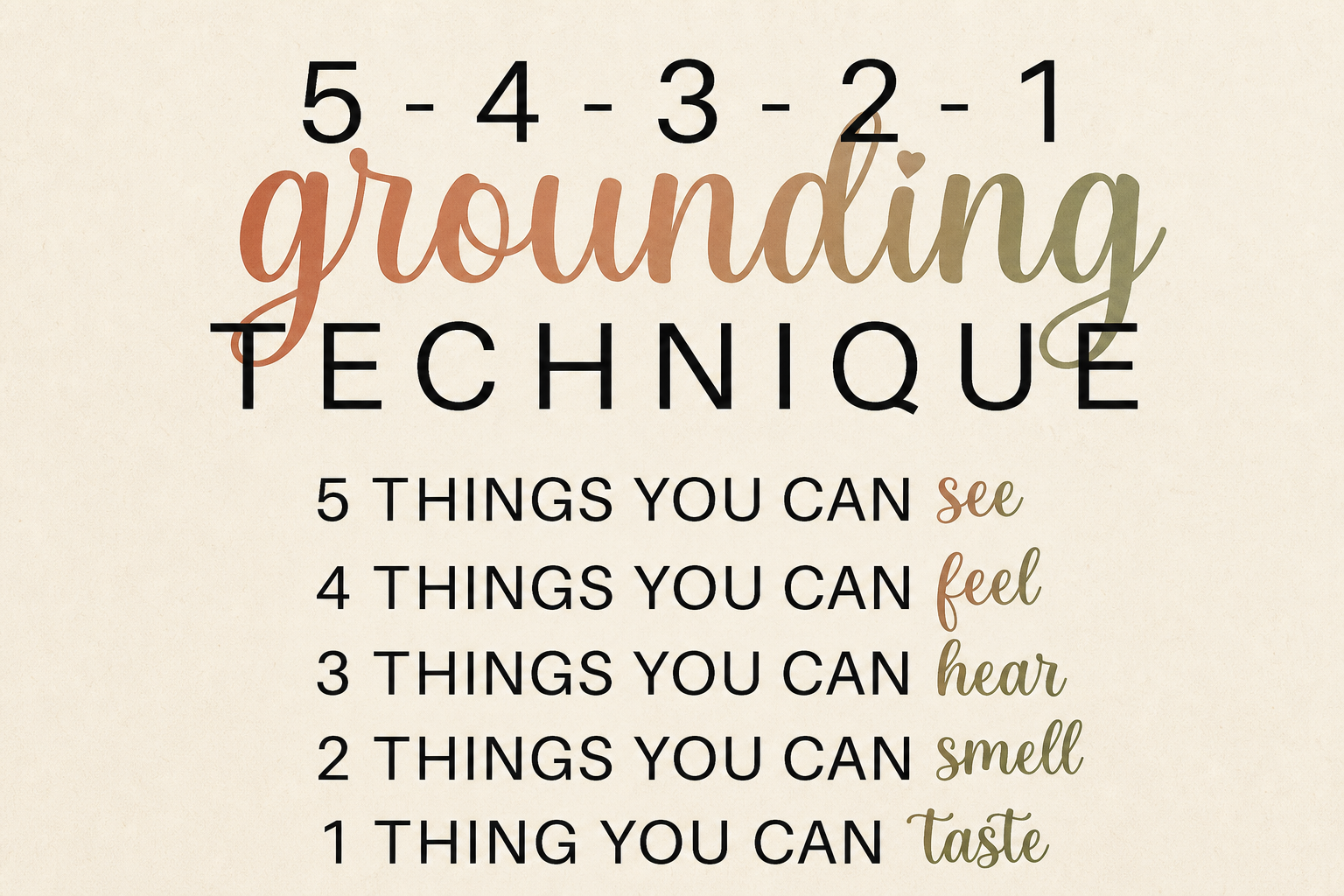
Panic peaks and falls. Fighting for air with frantic gasping can intensify dizziness. Soften the exhale. Plant your feet. Name the date and place out loud. If you used a grounding prompt, look up and find a new detail in the room rather than checking your pulse every few seconds.
Medical versus panic signals
First-time severe symptoms deserve medical evaluation. So do symptoms that arrive with fever, head injury, substance use, or fainting. Once medical causes are addressed, CBT skills and exposure to body sensations become more useful. Do not let reassurance checking become the only strategy.
Building tolerance on purpose
With a clinician, brief practices that safely bring on heat, breathlessness, or dizziness can teach the brain that sensations are uncomfortable and survivable. Do that work inside a plan, not alone during a highway drive.
Keeping this educational
Return to the disclaimer on the tool itself whenever the result starts to feel like a label. Educational pages work best when they lead to one next step: a call, a skill practice, a session topic, or a pause. If you notice yourself refreshing the page for reassurance, close the tab and use a skill offline, then talk with a person you trust. Warm tools still have edges. Use them lightly, repeatedly, and in conversation with real care when life is heavy.
References
Pompoli, A., Furukawa, T. A., Efthimiou, O., Imai, H., Tajika, A., & Salanti, G. (2018). Dismantling cognitive-behaviour therapy for panic disorder: a systematic review and component network meta-analysis. Psychological Medicine, 48(12), 1945-1953. https://doi.org/10.1017/S0033291717003919
Papola, D., Ostuzzi, G., Tedeschi, F., Gastaldon, C., Purgato, M., Del Giovane, C., Pompoli, A., Pauley, D., Karyotaki, E., Sijbrandij, M., Furukawa, T. A., Cuijpers, P., & Barbui, C. (2022). Comparative efficacy and acceptability of psychotherapies for panic disorder with or without agoraphobia: systematic review and network meta-analysis of randomised controlled trials. The British Journal of Psychiatry, 221(3), 507-519. https://doi.org/10.1192/bjp.2021.148
Manzoni, G. M., Pagnini, F., Castelnuovo, G., & Molinari, E. (2008). Relaxation training for anxiety: a ten-years systematic review with meta-analysis. BMC Psychiatry, 8(1). https://doi.org/10.1186/1471-244X-8-41
Zaccaro, A., Piarulli, A., Laurino, M., Garbella, E., Menicucci, D., Neri, B., & Gemignani, A. (2018). How Breath-Control Can Change Your Life: A Systematic Review on Psycho-Physiological Correlates of Slow Breathing. Frontiers in Human Neuroscience, 12. https://doi.org/10.3389/fnhum.2018.00353